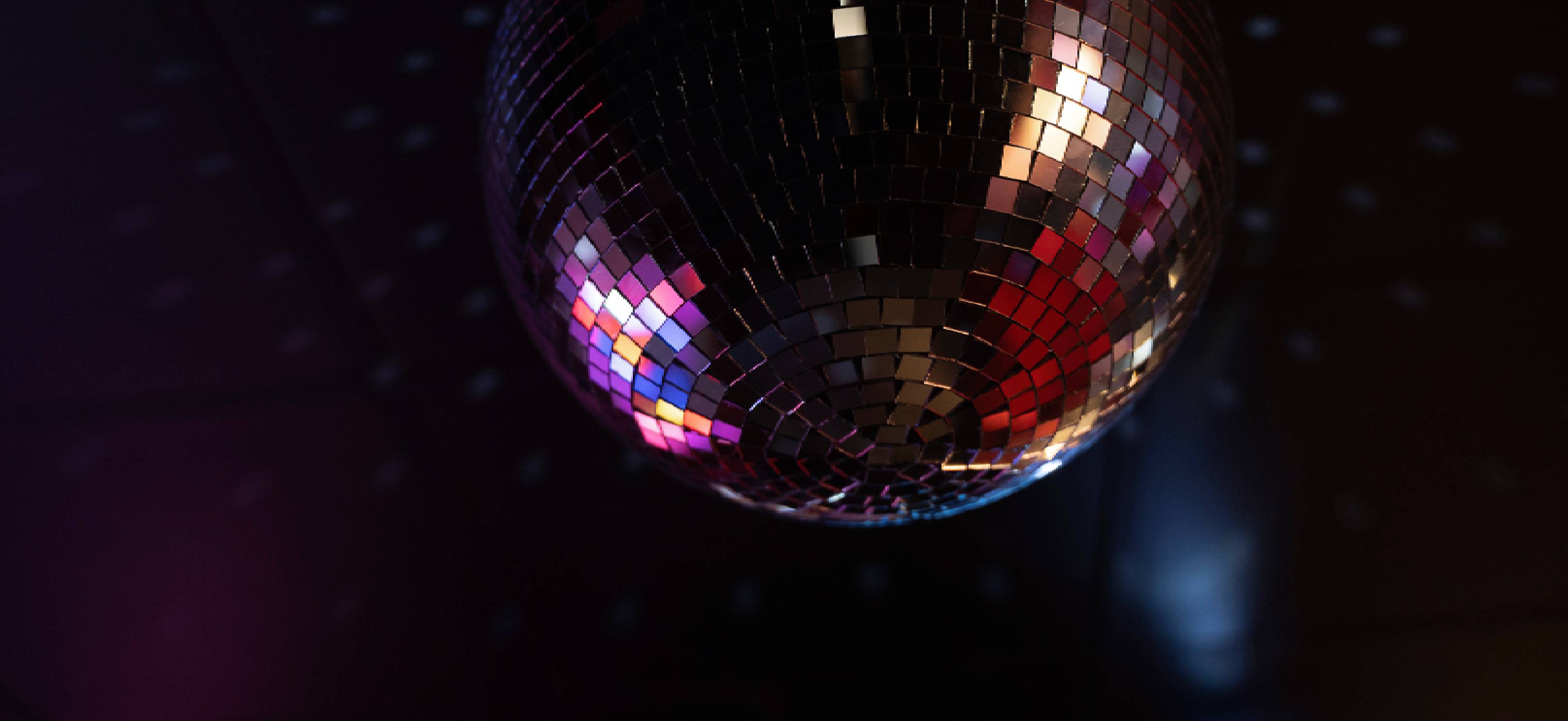
Creative Director, Curator and Producer, Making More Mischief, London College of Fashion, UAL, 2024

For Making More Mischief, Dr Leila Nassereldein conceived and directed an immersive installation with PXSSY PALACE that challenged the exhibition’s inherited terms of British folk culture. Working with founder Nadine Noor and members of the community, she approached the party not as nightlife adjacent to folklore, but as a contemporary folk formation in its own right: a culture made through repetition, dress, music, shared codes, collective memory and the continual remaking of archetypes through queer and global-majority experience.
The curatorial proposition began from the understanding that folklore is not a stable inheritance. It is produced socially, through forms that are repeated, altered and transmitted. PXSSY PALACE’s evolution from a house party near Brick Lane into an international platform for QTBIPOC cultural life offered a vivid instance of this process. Its parties generated more than spectacle; they established temporary structures of recognition, pleasure, protection and belonging.
Nassereldein directed the recording and collation of sound from a live PXSSY PALACE night. Rather than privileging the dance floor, the recordings moved through the party’s social thresholds – the entrance, toilets and smoking area – where its collective life became audible through greeting, gossip, flirtation, reassurance and negotiation. Composed into a score, these fragments preserved not a complete record of the event but its dispersed social texture: the affective and organisational labour through which the night was held together.
The score became the basis of a newly commissioned film. Conscious that some community members might be closeted or unable to appear publicly, Nassereldein rejected direct documentary capture. Archival photographs from previous parties were processed through generative-image software and developed with a filmmaker into a ten-minute loop. The resulting imagery retained the colour, movement and intensity of the originals while withholding recognisable identities. Anonymity became both an ethical safeguard and a formal principle: the community could enter the gallery without being surrendered to its gaze.
Nassereldein situated the work inside a four-by-four-metre domestic interior, returning the commission spatially to PXSSY PALACE’s house-party origins. The film was projected among outfits loaned by community members from themed nights. These garments formed a material archive of collective self-fashioning—traces of fantasy, citation, transformation and shared authorship.
At the centre of the room, the red Bassgasm sofa contained integrated subwoofers. Sound passed through the furniture and into the seated body, displacing the detached posture of gallery spectatorship. The work was not simply seen or heard; it was transmitted through contact, vibration and duration. The living room became both scenography and social memory.
Through sound, moving image, clothing and bodily vibration, Nassereldein translated an ephemeral cultural formation into exhibition space without fixing it as ethnographic evidence. Folk proposed that contemporary folklore is made wherever communities develop shared rituals through which to recognise one another, sustain collective life and imagine otherwise. PXSSY PALACE entered the exhibition not as an exception to British folk culture, but as evidence of where – and by whom – that culture is being remade.



You must be logged in to post a comment.