Lead Curator and Commissioner, Fashioning Frequencies, London College of Fashion, UAL, 2025

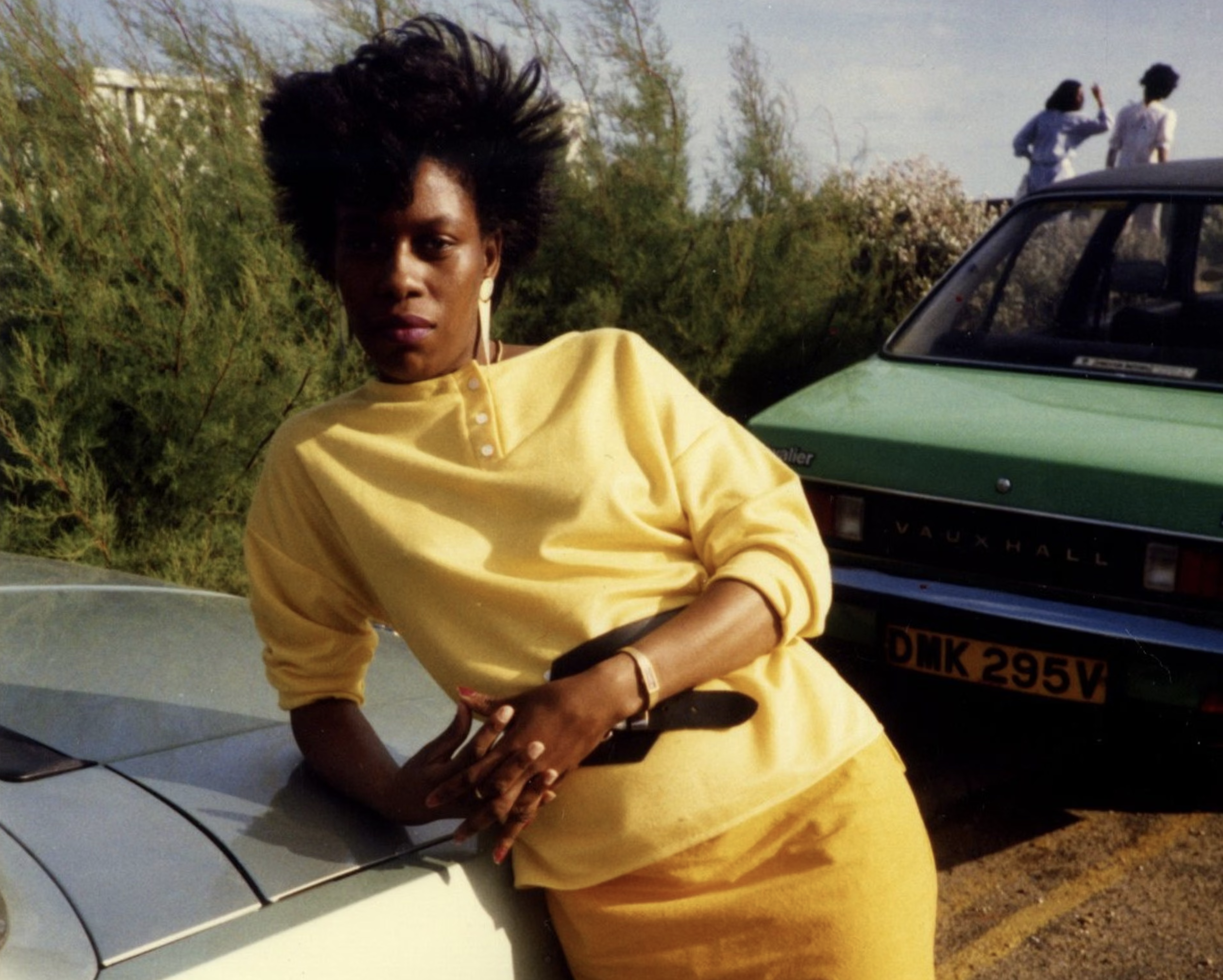
As the Curator of Fashioning Frequencies, Dr Leila Nassereldein commissioned Deborah Carnegie to extend research begun during her MA into a substantial new body of work for public exhibition. Working closely with the artist, Nassereldein supported the development of an archive of more than 100 photographs drawn from family albums, friendships, community networks and nightlife collections, tracing how Black women have dressed for Saturday nights from the Windrush era to the present.
The commission emerged from an institutional absence; Carnegie’s research found no sustained account within London College of Fashion’s library of Black British women’s style, nor of the formative role played by Jamaican and wider Caribbean communities in shaping fashion in postwar Britain. Yet the visual languages developed by Black women – in dress, colour, silhouette, hair, jewellery, gesture and nightlife – have repeatedly entered the mainstream, where they are renamed as trend, innovation or youth culture. Their aesthetic labour has been central to Western fashion even when its institutions have withheld authorship, legitimacy and historical memory.
The archive therefore does more than recover an overlooked subject. It exposes an asymmetry in the production of fashion history: Black women’s styles could be borrowed, circulated and commercialised while the women themselves remained absent from its books, collections and authorised narratives. What appeared to be a gap was, in fact, evidence of how the field had been constituted.
Carnegie’s photographs relocate fashion history beyond the runway, museum collection and editorial page. It is found in bedrooms and front rooms, at blues parties, dancehalls and clubs, and in the collective ritual of preparing to go out. Clothing is altered, borrowed, sewn and styled through knowledge exchanged between women. Saturday night becomes an alternative fashion infrastructure: a place where women excluded from official platforms become designers, makers, models, critics and arbiters of style in their own social worlds.
Nassereldein’s curatorial role involved establishing the scale and intellectual framework of the commission, supporting the gathering of new material, and shaping the selection and sequence through which these private images entered public view. Their movement into the gallery changed their status without erasing their origins. They remained family photographs – marked by intimacy, handling and transmission – while becoming evidence capable of unsettling the public record.
Presented together, the images did not simply add Black women to an otherwise coherent history of British fashion. They revealed that this history had already been made through their creativity, and that its apparent coherence depended upon forgetting them.
The project was subsequently profiled in The Guardian as an intergenerational history of Black women’s Saturday-night style. Its force lies in making the archive answerable to the aesthetic worlds it had consumed but failed to name.



You must be logged in to post a comment.